Groovy School Glass Wrap: A Designer's Real-World Review
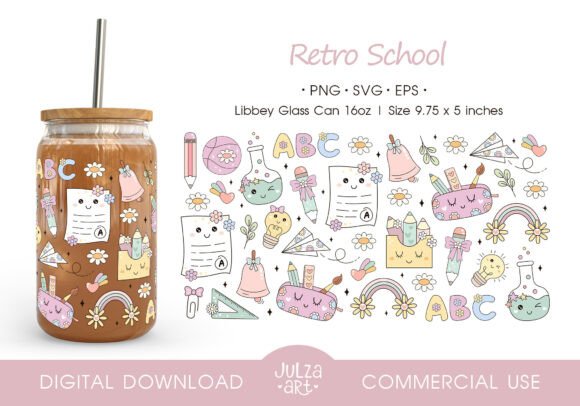
As a designer who stitches everything from baby blankets to boutique aprons, I look at a new embroidery file with a very practical eye. It’s not just about the visual appeal on a screen; it’s about how it will look after the needle hits the fabric, how it feels in the hand, and what kind of story it tells on a finished product. When I first opened the Groovy School 16oz Libbey Glass Can Wrap design, my immediate impression was one of cheerful nostalgia. It has that friendly, retro-school vibe that feels instantly giftable.
The Mood It Creates & Where It Belongs
The layout is clear and spacious, built to fit a specific canvas—that 9.75” width for the glass can is a helpful starting point for scaling. The theme is playful without being overly childish, which is a sweet spot for many projects. I could see this translating beautifully into a custom tote bag for a teacher, a cozy patch on a sweatshirt for a college student, or as a focal point on a kitchen towel in a handmade kitchen set. The detail level suggests it’s geared towards a medium-scale embroidery project, where the shapes can be clearly defined without overly dense stitching.
Thinking Through a Real Project: The Boutique Tote Bag
Let’s walk through a real case. Imagine you’re preparing a custom embroidered tote bag for a small shop’s back-to-school promotion. Using this Groovy School design, you’d need to consider fabric texture. A sturdy canvas or cotton tote would be ideal. The design’s lines and shapes would translate well into clean satin stitches for borders and likely fill stitches for the larger elements. On a dark fabric, you’d want to test thread color contrast—maybe a bright white or a vibrant yellow for that groovy feel. The customer reaction here would likely be positive; it’s recognisable, charming, and adds tangible value to a simple functional item, elevating it from a plain bag to a personalised gift.
Performance Across Different Embroidery Situations
This design’s personality makes it versatile for a range of products. For custom apparel like sweatshirts or t-shirts, its width means you’d need a larger hoop and careful stabilizer choice, especially on stretchy fabric. As an embroidered patch, it would stand out nicely, but you’d want to inspect the small details in the lettering and decorative accents to ensure stitch clarity. For baby embroidery on a blanket or romper, the playful theme fits perfectly, but on thin fabric, managing stitch density becomes crucial to prevent puckering.
In a craft business context, such as for Etsy listings or craft fair products, this design offers a ready-made asset for holiday gifts (think teacher appreciation, graduations) or everyday boutique merchandise. It boosts the handmade presentation by providing a cohesive, professional-looking graphic. For digital product sellers, it’s a solid base for creating printable mockups or previews that help buyers envision the finished product.
Where Caution is Needed: The Practical Designer Notes
Every design has its considerations. With the Groovy School wrap, pay close attention in these scenarios:
- Small hoop sizes: Scaling it down significantly for a cap or a baby hat might compromise the clarity of its details.
- Textured or dark fabrics: The retro mood relies on clear color separation. Test on scrap fabric first to check if your chosen thread pops against the background.
- Dense stitch areas: Review the provided file to identify any potential high-density spots that could be tough on delicate fabrics or require multiple trims.
- Products needing frequent washing: On items like aprons or kitchen towels, ensure your stitch choices and stabilizers are robust enough for durability.
Always, always test the design on scrap fabric first. This is non-negotiable. It allows you to check hoop size compatibility, thread contrast, and the behavior of small details. I also recommend testing it in a black and white mockup to understand the pure structure without color influence, and comparing how it looks on both light and dark fabric backgrounds in your software preview.
Impact on Value, Trust, and Engagement
From a business perspective, using a well-executed design like this directly affects customer trust and product value. A clean, happy embroidery on a tote bag or pillow cover looks professional; it signals care and skill. This enhances brand consistency for a small shop owner and increases the giftability of the item—people are more likely to buy it as a present. For buyer engagement, a design with a clear, friendly theme like “Groovy School” helps the product tell its own story in an Etsy listing or on a shelf, making it easier for customers to connect with it.
Final Thoughts Before You Stitch
The Groovy School 16oz Libbey Glass Can Wrap design is a graphics file that feels ready for real-world crafting. Its strength is in its themed layout and intended scale. My advice as you prepare for your embroidery project—whether for personal gifts or commercial embroidery—is to confirm the specifics the design doesn’t explicitly provide.
Check the actual stitch count and file formats from your source. Confirm the licensing terms before selling finished items or derived digital products. Understand its compatibility with your machine and whether elements are suited for techniques like appliqué. Once you have those details, this design can become a reliable asset for creating finished products that carry a smile and a sense of thoughtful craftsmanship. It’s a design that asks for a bit of practical planning but rewards you with a cheerful, market-ready result.