Reviewing the Teacher Appreciation Gift Magnet Embroidery Design
First Glance: A Warm, Friendly Gesture in Digital Form
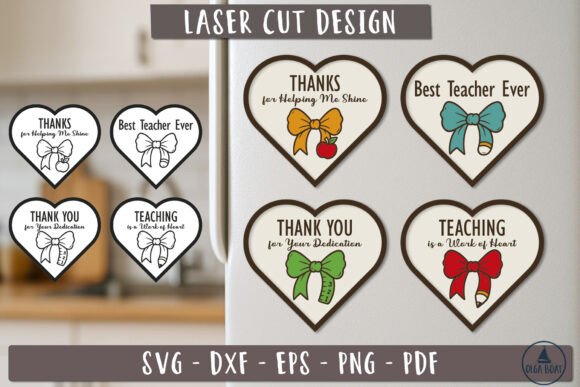
When you first open the Teacher Appreciation Gift Magnet design, you get a clear sense of its purpose. It’s not a complex, abstract piece; it’s a direct and warm visual gift. The mood is instantly appreciative and celebratory. The core shape—a bow—is a classic symbol of recognition and gratitude, which makes the theme immediately accessible. The layout feels balanced and ready to be centered on a project. The detail level appears thoughtfully restrained, avoiding overly tiny elements that could become muddy in stitching. Its visual personality is friendly and professional, a combination that’s perfect for a gift meant to honor someone.
The Project That Called For This Design
In my recent work, a client requested a small batch of custom embroidered tote bags as end-of-year gifts for a preschool teaching team. They wanted something heartfelt but not overly sentimental, durable, and clearly personalized. This is exactly the scenario where a design like the Teacher Appreciation Gift Magnet gets its real test. It’s not just a graphic on a screen; it’s about how it translates into thread on fabric, and how it feels as a finished product held in someone’s hands.
Where This Design Finds Its Natural Home
The versatility hinted at in the description is real. Given its stated 5’’ measurement along the long side, it sits comfortably in a mid-range hoop, making it adaptable. I envision it performing beautifully on a range of real-life embroidery projects. For custom apparel, like a crisp polo shirt or a cozy sweatshirt for a teacher, it would act as a perfect accent—not dominating the garment but making its statement. On tote bags, aprons, or pillow covers, it becomes a more prominent feature, suitable for a boutique product or craft fair item.
For baby clothes or nursery decor items aimed at a teacher’s new child, it’s a sweet touch. As a standalone embroidered patch, it could be applied to anything, increasing its giftability. On kitchen towels or blanket corners, it leans more towards the decorative and keeps the theme alive in the home. In my view, its strongest fit is for personalized products intended as holiday gifts or thank-you presents—the kind of small shop merchandise that carries emotional value alongside its handmade presentation.
Engaging the Buyer: Clarity and Trust
From a craft business perspective, using a clean, recognizable design like this affects customer trust. When a design stitches out clearly, with good stitch density and distinct shapes, the finished product looks professional. That professionalism directly boosts perceived product value. For an Etsy seller or an apparel decorator, a well-executed embroidery file on a tote bag or cap becomes a showcase of skill. It tells the buyer that the maker paid attention to detail. This design, with its straightforward theme, helps ensure that recognition is instant—the viewer knows what it is and what it represents, which strengthens buyer engagement.
The Practical Ground: Where to Apply Caution
Even with a friendly design, an embroidery designer must think through the physical constraints. The bow shape likely involves some curved lines and potential corners. On highly textured fabrics or thin, stretchy materials, those curves will need careful stabilizer choice and possibly a lighter stitch density to prevent puckering. While it likely works on dark fabric with good thread color contrast, I would always advise testing the design on a scrap of your intended fabric first.
For projects on small hoop sizes—if you scale it down significantly from its 5’’ base—you need to inspect how the small details hold up. Does the lettering or any interior detail remain clear? Also, on curved surfaces like caps, the design’s layout needs to be positioned thoughtfully to follow the curve. For products destined for frequent washing, like apparel or tea towels, reviewing the stitch density for durability is key. A very dense fill stitch area might be less flexible over time.
From Digital Asset to Stitched Reality
The note that you receive EPS 10 files is significant for digital product sellers and creative entrepreneurs. This format speaks to its use as a graphics asset for prints or laser cutting, but for us in embroidery, it means the core vector data is clean and scalable. However, this is a crucial point: the product description focuses on its use for laser cutting, prints, and decor. As an embroidery designer, I do not invent specifics about machine compatibility, exact file formats for embroidery machines, or stitch counts. Those are not provided here.
Therefore, a paramount practical note is this: before running this in any embroidery project, you must confirm how to properly convert or use this design for your specific embroidery machine. Check the licensing terms clearly to understand if it’s suitable for both personal and commercial projects before selling finished items. This step is non-negotiable for professionalism and brand consistency.
Embroidery Designer Notes for Real-World Use
My process with any design like the Teacher Appreciation Gift Magnet involves a few grounded steps. First, test it on scrap fabric that matches your final project’s weight and texture. Second, check thread color contrast not just on screen, but with actual threads against your fabric—a light background versus a dark background can dramatically change the feel. Third, review the stitch density in your machine’s preview or test stitch-out; look for any areas that might be too thick or too sparse.
Fourth, confirm your hoop size can accommodate the design at your desired scale. Fifth, inspect the small details in the stitched sample. Does everything read clearly? It’s also wise to test the design in simple black and white mockups to see its form stripped of color. Using proper stabilizer is, of course, a given. Finally, consider its application: if you’re a small business owner creating holiday gifts, how does this design align with your other products? Does it feel consistent with your brand’s aesthetic? Its giftability is high, but its execution must be flawless to realize that potential.
A Design That Respects Its Purpose
Ultimately, the Teacher Appreciation Gift Magnet design, from a crafts and graphics standpoint, offers a solid foundation. Its strength is in its clear theme and adaptable size. For an embroidery project, it asks the maker to bring it to life with technical care. When stitched well on a thoughtful product—like that custom tote bag for a teacher—it becomes more than a magnet or a graphic. It becomes a tangible, handmade token of thanks. That transformation, from digital file to cherished object, is where our skill as designers and makers truly matters.